With so many products claiming to support energy, immunity, and overall wellbeing, it’s no surprise people often ask whether multivitamins actually work.
The answer isn’t as simple as yes or no. While multivitamins are not a replacement for a healthy diet, they can play a role in supporting everyday nutrition when it’s difficult to consistently meet all nutrient needs through food alone.
In this blog, we take a closer look at what multivitamins actually do in the body, when they may be useful, and whether they’re something you actually need in your daily routine.
Do multivitamins work?
Multivitamins are one of the most commonly used supplements in the world, but they are also often misunderstood.
The honest answer is that they do work, but not in the way many people expect. For most healthy adults eating a reasonably balanced diet, multivitamins are not designed to dramatically change health outcomes or act as a “quick fix.” Large-scale research has not shown consistent evidence that they prevent major diseases such as heart disease or cancer, or extend lifespan.
Where they do play an important role is in helping support nutritional adequacy. In real life, even with a good diet, it can be difficult to consistently meet all nutrient needs every day. This is where multivitamins can be useful, helping to top up key vitamins and minerals and support normal body functions like energy production, immune function, and overall wellbeing.
So rather than being a “miracle solution,” multivitamins are best understood as a practical way to support daily nutrition, especially when diet, lifestyle, or individual needs make it harder to get everything from food alone.
When multivitamins can help
While multivitamins aren’t essential for everyone, they can be a helpful way to support everyday nutrition, especially when diet, lifestyle, or life stage makes it harder to consistently meet nutrient needs through food alone.
They can be particularly useful in situations such as low sun exposure, where vitamin D levels may be harder to maintain naturally, or in plant-based or low-meat diets where vitamin B12 intake may be lower. Iron can also be important for some individuals, particularly menstruating women, where requirements are naturally higher.
In many cases, a well-formulated multivitamin can provide a simple, reliable way to help maintain adequate nutrient levels and support overall wellbeing as part of a balanced lifestyle.
How to find a good multivitamin
Another factor that influences whether multivitamins actually work is the quality of the product itself. Not all multivitamins are formulated the same, and this can impact how useful they are in supporting everyday nutrition.
A good multivitamin should be transparent about its ingredients, clearly showing what’s included and in what amounts. It should also focus on meaningful nutrient levels, rather than relying on small or heavily diluted doses, and avoid unnecessary fillers or artificial additives.
It’s also worth considering how the nutrients are delivered. Some formulas use isolated synthetic vitamins, while others include more whole-food or naturally derived ingredients that work alongside other plant compounds.
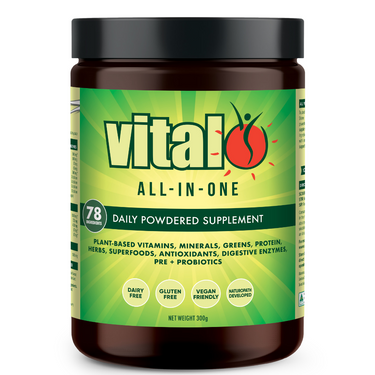
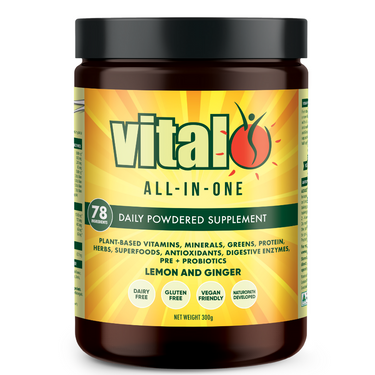
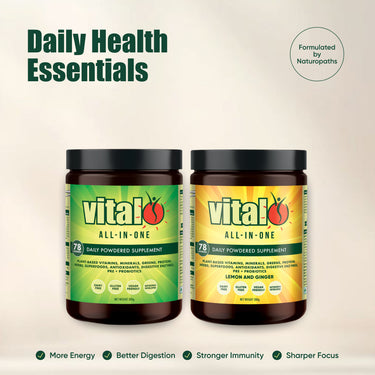
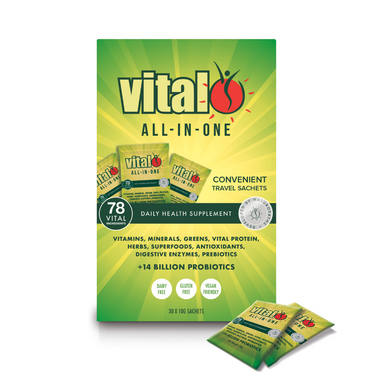
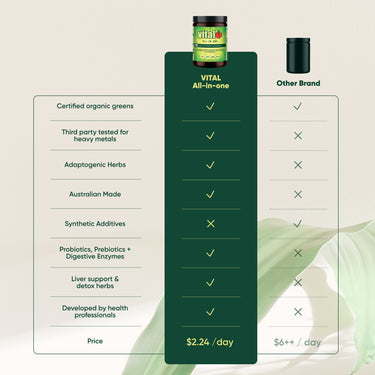
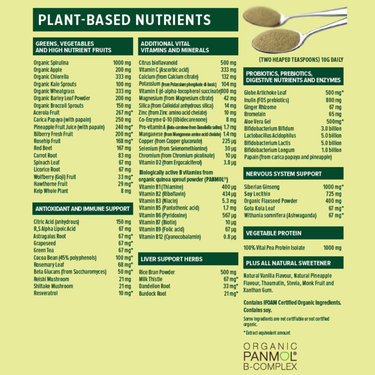
Vital All-In-One takes a whole-food, all-in-one approach, combining 78 vital vitamins, minerals, greens, probiotics, and plant-based nutrients in a single daily serve to fill the nutrition gaps commonly found in diets.
FAQs
1. Can you take too many multivitamins?
Yes, it is possible to take too many multivitamins, especially if you are combining multiple supplements or exceeding the recommended daily dose. Some vitamins (like A, D, E, and K) are fat-soluble, meaning they can build up in the body over time if taken in excess. This is why it’s important to follow label instructions and avoid stacking multiple multivitamins unless advised by a healthcare professional.
2. Are gummy multivitamins as effective as tablets?
Gummy multivitamins can still provide essential nutrients, but they are often limited in dosage and may contain added sugars or fillers. The most effective option depends on consistency and the quality of the formula rather than format alone.
3. How long do multivitamins take to work?
This depends on what you are expecting. If a multivitamin is helping to correct a nutrient deficiency, it may take a few weeks to a few months to notice changes as nutrient levels rebuild. However, for general use in people, multivitamins are designed more for long-term nutritional support rather than producing immediate effects.
4. Should I take a multivitamin in the morning or at night?
There is no strict rule, but most people prefer taking a multivitamin in the morning with food. The most important factor is consistency, whether you take your daily multivitamin in the morning, afternoon, or evening.
5. Is it better to get nutrients from food or a supplement?
Whole foods should always be the primary source of nutrients, as they provide fibre, antioxidants, and a wide range of naturally occurring compounds. However, a multivitamin supplement can help fill nutritional gaps when diet alone isn’t enough. Supplements are best seen as support, not a replacement.
6. Do women need a different multivitamin than men?
In some cases, yes. Men and women can have different nutritional needs, particularly when it comes to nutrients like iron, which is often more important for women due to menstruation. However, many all-in-one multivitamins are designed to support general daily health needs for a broad range of adults.